

The Complete Guide to E-Bike Batteries: Care, Maintenance, and Storage
At the risk of being obvious: an e-bike without a battery is just a bike. But that said, not just any battery will do.
An e-bike battery is responsible for how much power can be delivered to your motor, translating into how much assistance your e-bike gives you on rides. It's also among the most expensive single components of a bike, with high-quality replacements typically costing several hundred dollars. Because of this, learning about e-bike batteries is critical to getting the most out of your e-bike experience — and the most bang for your buck.
Here's what we're about to go over:
- How Does An Electric Bicycle Battery Work?
- Volts, Amp-Hours, and Watt-Hours: What Do They Mean?
- Qualities Of The Best E-Bike Batteries
- When It's Time for a New Battery
- UL Certification: Why It Matters
- 10 Best Tips To Maintain Your E-Bike Battery
Time for a new battery?
Find the right UL Listed replacement matched to your Magnum model.
Shop BatteriesHow Does An Electric Bicycle Battery Work?
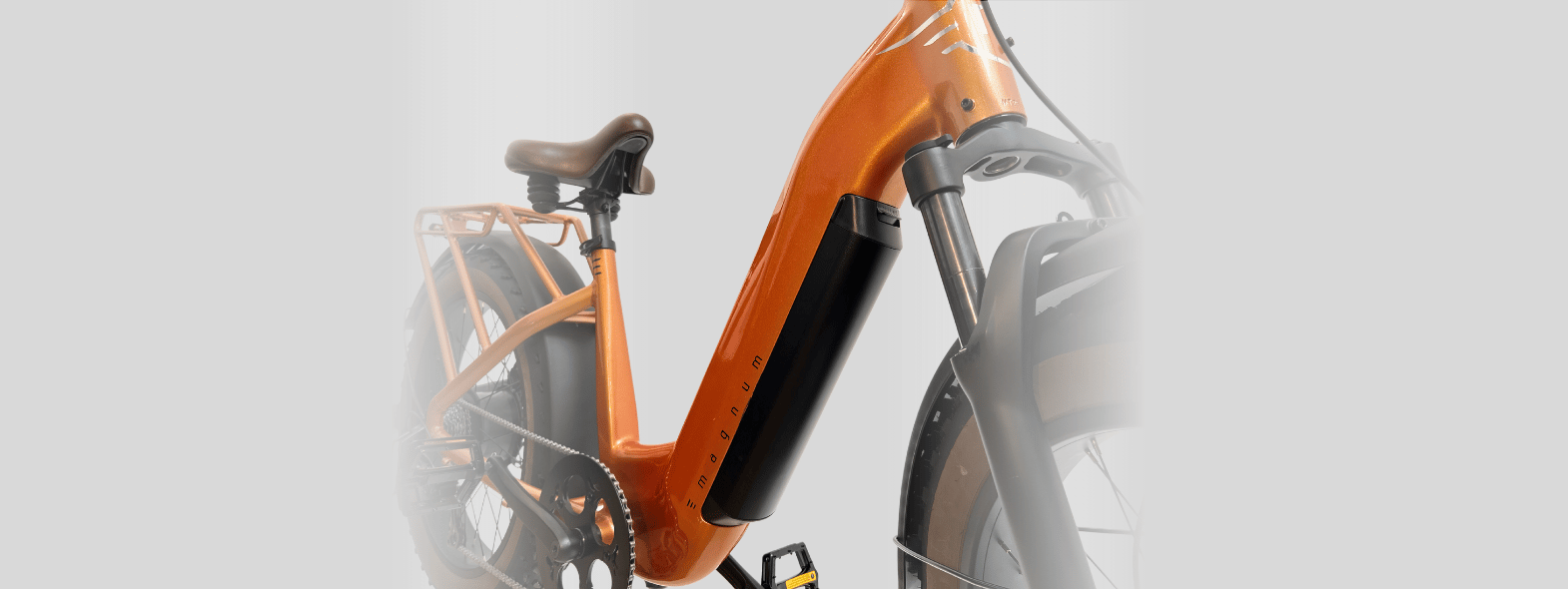
The battery stores all the electrical energy that will eventually be sent to your motor. E-Bike motors don't have any energy of their own, so the battery is what makes the whole electrical system possible.
E-bike batteries have to be powerful enough to support the motor throughout a typical ride. While you do need to charge your battery regularly, a quality e-bike battery shouldn't interrupt your commute or sightseeing tour by powering down before your ride is over.
Magnum E-Bike batteries are made of a series of advanced lithium-ion cells. Each cell is like a mini battery; they join together with the other cells to create a battery powerful and long-lasting enough to take you where you need to go.
Volts, Amp-Hours, and Watt-Hours: What Do They Mean?
Voltage refers to the potential power of a battery. Technically speaking, voltage measures the pressure that allows electrons to flow. Similar to water pressure from a hose, the higher the pressure, the more powerful it can be.
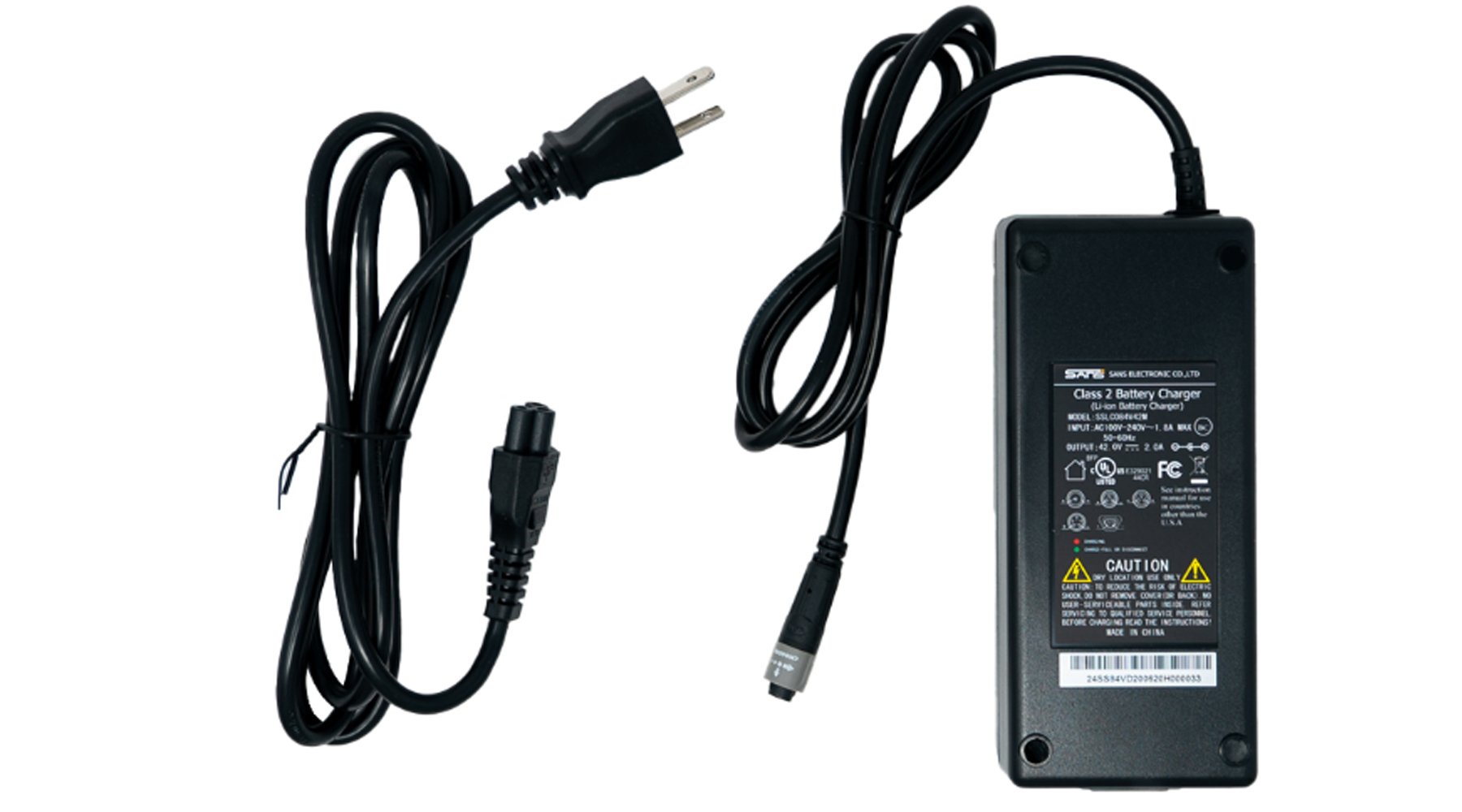
For similar reasons, your battery's charger needs to be rated at the same voltage as the battery.
Your battery plays the same role as the fuel tank in an internal-combustion vehicle, but unlike a tank that we pump fluid into, there is no straightforward way to directly measure how much energy is stored. Because of this, battery capacities are measured in calculated units like Amp-hours or Watt-hours. Both give insight into how much energy is left "in the tank." The difference: Ah measures how many Amperes of current a battery can provide if drained from 100% to 0% in one hour, while Wh measures how many Watts of power a battery can provide when drained in one hour.
Both values are useful, but Wh takes the battery voltage into consideration and is easily calculated by multiplying the Amp-hour rating by the voltage. For example, a 48V battery with a 15Ah capacity would have 48V x 15Ah = 720Wh. With this battery, if you were to power the bike at a constant 720W, it would drain in one hour. But in reality we're typically going different speeds, slowing down, coasting, braking, and waiting for lights to change, so we get much more than one hour on a charge.
Qualities Of The Best E-Bike Batteries
There are many e-bike battery makers out there! So what's the difference between a high-quality battery that will help you ride farther and a cheap battery that just doesn't perform?
Optimal Materials
Not long ago, most batteries were made from heavy, inefficient, and unsustainable materials like lead-acid or nickel-cadmium. At Magnum, we use the latest lithium nickel cobalt manganese (Li-ncm) battery technology.
Battery Management System (BMS)
The battery management system in each Magnum E-Bike battery controls the individual performance of each battery cell. BMS makes sure that each smaller cell drains, charges, and works the same as others. Without an effective BMS, e-bike batteries would be inconsistent, failing to deliver predictable power to the motor.
Like any hardware, batteries become worn over time. BMS helps extend battery lifespan by avoiding the main causes of battery deterioration: overcharging and excessive depletion. Cells that overcharge get fried and lose performance. Similarly, when batteries drain too much energy and can't properly recover it, they start to fail. BMS regulates charging and energy deployment across every individual cell, helping the overall battery to perform better and for longer.
Battery Cycle Lives And Long-Range Performance
The number of times you can charge and deplete (discharge) the battery completely before it starts to lose capacity is called its cycle life. It's normal for batteries to lose performance over time, but higher-quality and better-made batteries have larger capacity and longer range, resulting in increased cycle lives.
Higher-quality batteries typically have a larger capacity and longer range compared to cheaper models. But it's difficult to produce batteries with high amp-hours and watt-hours that still fit into the slim packaging necessary for a balanced, aerodynamic e-bike.
It's important to note that batteries continue to function even after they start to lose some efficiency. When batteries have surpassed their cycle life, you may notice your ride range decreasing, needing a charge after fewer miles.
At Magnum Bikes, the cycle life of our advanced Lithium-NCM battery is 700 cycles. Once our batteries have powered riders through 700 charges and discharges, our battery still performs at around 80% of its original level. With proper care, you can typically get 800-1000 charge cycles out of your Magnum battery — roughly two to five years, depending on how frequently and how far you ride.
When It's Time for a New Battery
As the bike is used your battery's performance will degrade, just like all other batteries of different chemistries (lithium-ion, lead-acid, nickel-cadmium, etc.). Battery degradation does not normally affect your bike's performance, but it does result in shorter range as the battery's State of Health declines. Just like an older smartphone or laptop that needs to be charged multiple times a day, or a car battery that needs a jump start if it's not used for a few days, e-bike batteries will deliver less range over the course of a few years.
Fortunately, this is an easy fix by replacing your old original battery, and this is a great time to upgrade to a larger battery for more range than the bike had when new!
Choosing a Replacement Battery
Replacement e-bike batteries are frequently specific to a specific bike model or family, so if it's time for a replacement verify that you select a battery that:
- Is the same Voltage as the rest of your e-bike's system: 36V batteries are compatible only with 36V bikes and chargers, and 48V batteries are compatible only with 48V bikes and chargers.
- Is the same or greater Capacity (Ah or Wh) than your original battery (to maintain at least original range performance)
- Is intended specifically for your bike and is supplied by the same manufacturer as your bike. It is impossible for us to test every aftermarket component option for every bike model we have produced, and there are cases of other brands using some of the same connectors as our batteries but with different polarity or other details that result in incompatibility. On top of that, all of our current bike models are tested to conform to the latest UL standards, and using a battery other than what came with (or is designed for) your bike makes it no longer UL certified.
UL Certification: Why It Matters
 Over the past few years, the best e-bike brands and component suppliers have been electing to have their products designed and tested to meet two UL certification standards: UL2271 and UL2849. UL2271 focuses entirely on the battery while UL2849 expands the testing focus to all of the electrical components on the bike. California and New York City have created laws that ensure that only e-bikes and e-bike batteries that comply with these standards are legal to sell and use, so that eventually only UL-conforming bikes and replacement batteries are around. There is active legislation in other states and local governments that we expect will follow California's and NYC's lead over the next few years. This focus on UL conformity is also being implemented by many apartment complexes and HOA's since low-quality e-bike batteries and systems can pose risks to people and property.
All current Magnum bikes conform to or exceed the UL standards, and are rigorously tested by internationally-recognized testing groups like SGS, ACT, and TüV (depending on the bike and battery model). We provide complete bikes, additional critical components like system controllers, motors, wiring harnesses, chargers, batteries — anything that uses electricity — to these groups and they test every aspect of these systems. Extreme heat and cold, destructive tests that push the limits of the parts, water pressure tests (both fresh- and saltwater), RF interference, and even physical destructive tests are all part of achieving the certification. On top of that our production partners and suppliers open their doors for voluntary production and supply chain audits. Only once a bike and battery has passed these tests do we offer our bikes for sale.
To summarize, choosing a bike that conforms to UL2849 means you (and your neighbors) can trust that any electrical risk is reduced to as little as possible.
10 Best Tips To Maintain Your E-Bike Battery
As the most expensive part to replace on your e-bike, it's worthwhile to take the extra time and effort to keep your battery in good health. For that reason, even seemingly obvious tips bear repeating.
Follow these recommendations to get the best performance and life out of your e-bike battery.
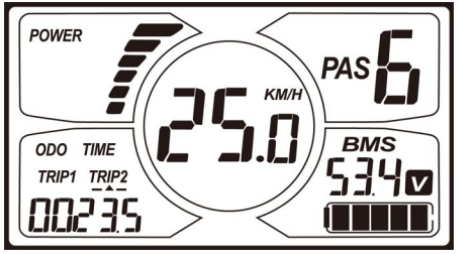
- Charge the battery before it gets to 30% life. Batteries are at their healthiest when they stay at or above a 30% charge level. When you're out on a ride, watch your battery's charge level. It's shown on your e-bike's display monitor. When you get down to 20% or even 10% battery, you're at risk of losing power before you get back to your charging station. Not only does that put you at risk of unassisted pedaling for a long or hilly journey back home, but it also puts unnecessary strain on the battery. Over time, this speeds up the natural process of deterioration. If you go for extended rides, it may just be a fact of life that you'll drop into the low battery levels. Don't sweat it — just know that your battery will last a bit longer if it stays topped off.
- Don't charge or use the battery on the bike while it's hot. Batteries can get hot for a number of reasons. On really warm days, the outside temperature can cause a battery to overheat. Climbing steep terrain can cause the motor to get hot — and potentially the battery, too. Another cause of a hot battery is using a charger with a higher voltage than the battery. But whatever the reason, your response to a hot battery should always be the same: let it cool down before continuing use or charging.
- Don't charge immediately after use. Even if your battery doesn't feel hot, let it rest when you get home after a ride. You won't have to wait long — batteries recover from use very quickly. You can use the time to hang up your helmet, remove your shoes, and maybe even give the bike a quick clean or tune-up. In less than 5 minutes, you can charge your battery to get ready for your next ride.
- Don't use it immediately after charging. Are you seeing a pattern? When it comes to e-bike battery care, patience is a virtue! If you're leaving on a ride right away, unplug the charger for just a few minutes before you head out. This valuable reset gives your battery time to prepare to transfer energy to the motor on your ride.
- Unplug the battery when fully charged. When your battery has reached 80% to 100% charge, go ahead and unplug the charger. Don't worry; your battery will hold the charge until your next ride! This is important because while you can't actually overfill your battery with power, you can strain the battery by continuing to charge it after it's full.
- Keep your battery at the right temperature. When you're not riding, store the battery around room temperature: 68°F/20°C or slightly lower. Feel free to store your bike in a weatherproof garage or shed, protected from the elements — but if the temps dip much higher or lower than 68°F/20°C, take the battery indoors.
- Don't get your battery wet. This is true of any battery, really! Your battery has a sealed, waterproof protective cover that keeps it protected from the rain while you ride. Where you need to be careful is in cleaning and storing your bike and its battery. You might look to a pressure washer to get dirt and grime off your bike quickly, but the intense jet of water can get past the seals, damaging the inside of the battery. And when you aren't riding your e-bike, store it inside. Excessive and continuous exposure to rain and snow can compromise the waterproof housing over time.
- Travel safe. Whether you're traveling with your e-bike on a car rack or in a bike box for shipment, be sure to remove the battery beforehand. This protects it from damage or accidental loss. Remember that you also need to protect that battery from rain and snow! So removing it before putting your bike on a car rack is the best way to keep your battery dry while you travel.
- Know what to expect for winter performance. In addition to protecting your battery from snow and excessive cold, be aware that e-bike batteries are less efficient in the cold. This means they may deliver a reduced mileage range in extremely cold temps. Try to shorten your rides, or at least ensure that you're able to charge your battery frequently for extended rides. But don't worry; the performance will bounce back when warmer temperatures return.
- Always use the right charger. Your e-bike comes with a charger made specifically for that model; use it! It's critical for battery health that the charger and battery are compatible and work with the same voltages. Otherwise, at best you'll see extended charge times — and at worst, you can fry the battery.
Take Care Of Your Battery And It'll Take Care Of You
There isn't a whole lot to remember for a healthy e-bike battery! Just keep an eye on your battery life when you're riding, charge it when needed (but don't forget to unplug when it's done!), store it properly, and transport it safely. By following these steps to support long-lasting battery health, you'll get the most out of your e-bike's battery for many rides to come.
Ready for a New Battery?
Find the right UL Listed replacement for your Magnum — matched to your specific bike model. Every Magnum battery is rigorously tested, direct-fit, and built to restore your original range.
Shop BatteriesCharging matters too.
Pair your battery with a compatible Magnum charger to keep it performing at its best.
See ChargersNot sure which battery fits your bike? Talk to our team — we'll confirm compatibility before you order.